


Sensus Plantae
This project began with a question that became increasingly uncomfortable for me: when we talk about wanting to understand "plant intelligence," what do we really want from plants? We know they have complex ways of sensing and responding to the world, but our methods of trying to "listen" often reveal more about ourselves.


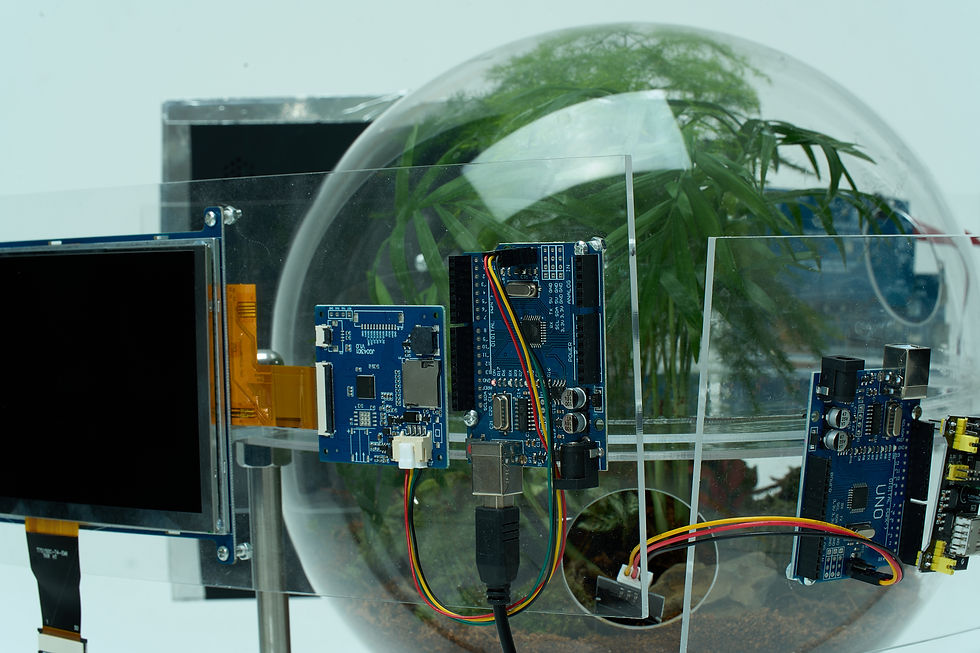
I placed the plant inside a glass globe to embody this conflict. Is it a protected biosphere, or a monitored cell under surveillance? The sensors attached to its leaves are my attempt to translate its inner life into a language we can perceive—light and sound. Yet, this act of translation is inherently biased. Humans and plants have completely different ways of processing information and being in the world. Why, then, do we insist on interpreting their existence through the narrow lens of human terminology and consciousness?


The screen in this installation does not show the plant's "true feelings." Instead, it displays our own projection—our anthropocentric desire to see a reflection of ourselves in a form of life that is profoundly different. The technology, meant to be a bridge, also functions as a frame, reinforcing our position as observers who control and define the interaction.
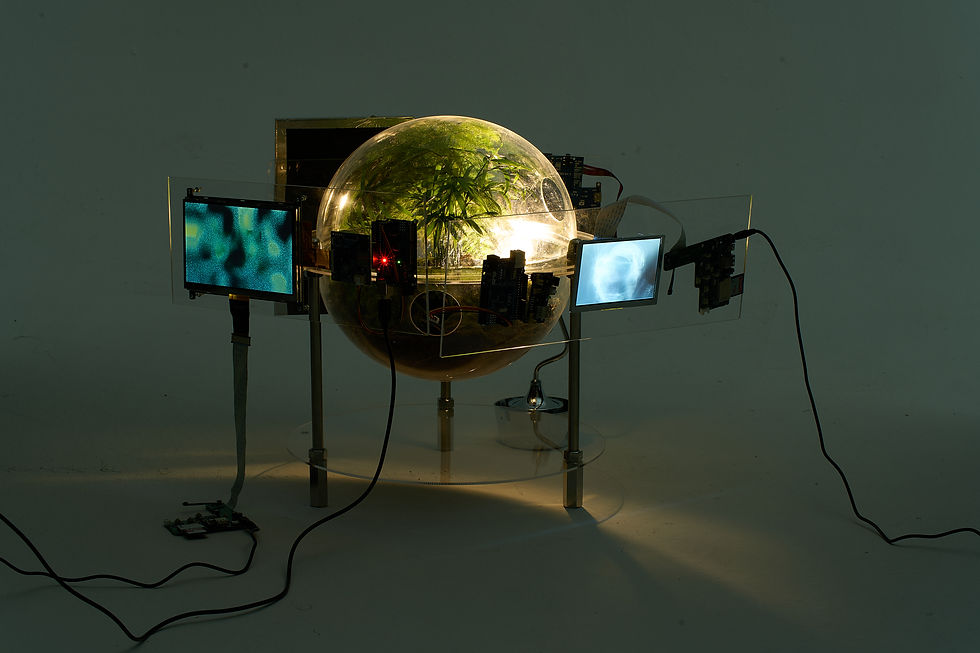

I see this piece as a machine built to question our own gaze. It asks whether true co-existence with nature requires less technological translation and more silent, humble observation of a consciousness we may never fully understand.